Finding a reliable 3D room scanner helps transform how you capture spaces, design interiors, or plan renovations. This article highlights five top options with strong performance, precise measurements, and practical features. Each pick is evaluated for indoor room scanning, color capture, and ease of use to support DIY projects, architectural modeling, or virtual tours.
| Product | Brand | Key Strength | Range |
|---|---|---|---|
| Matterport Pro3 3D Camera | Matterport | Professional-grade 3D capture with high precision | Up to 100 m (extended range in files) |
| Creality CR-Ferret SE 3D Scanner | Creality | Anti-shake, full-color, fast scanning | 0.1 mm precision |
| Eagle Max LiDAR Spatial 3D Scanner | XWKJLIE | 360° coverage with high-resolution color | Up to 140 m |
| 3DMakerpro Eagle LiDAR 3D Scanner | 3DMakerpro | 8K imaging with wide FOV, accurate mapping | Up to 70 m |
| Matter and Form Three 3D Scanner | Matter and Form | Autofocus, high-precision, no dots | 0.033 mm accuracy |
Matterport Pro3 3D Lidar Scanner

Matterport Pro3 integrates advanced LiDAR with photorealistic 4K imagery to deliver fast, accurate indoor and outdoor space capture. It supports high-precision scans for architectural visualization, real estate virtual tours, and museum-grade digital twins. The camera excels in large spaces with an extended scanning range up to 100 meters, enabling rapid data collection across big rooms. Its lidar sensor generates millions of measurements per scan, producing detailed models suitable for immersive walkthroughs. Color fidelity is enhanced by a high-resolution camera system, making textures and lighting feel true to life. Workflow compatibility with standard workflows through e57 exports supports integration with popular 3D software.
Creality CR-Ferret SE 3D Scanner
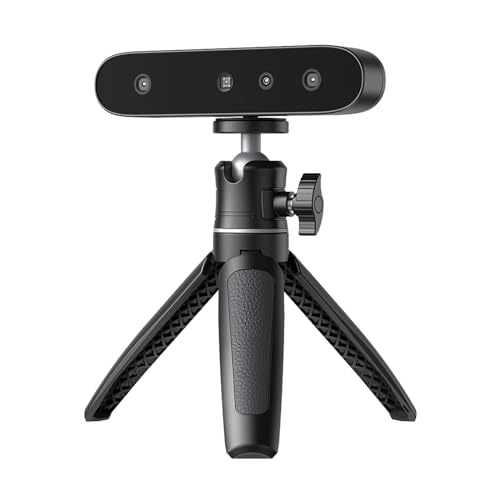
The Creality CR-Ferret SE 3D Scanner emphasizes anti-shake stability and color accuracy, making it well-suited for scanning black or metallic objects without spray. It uses a one-shot 3D imaging approach to improve scan reliability even when hand movement is imperfect, reducing the need for repeated attempts. With a claimed resolution up to 0.1 mm and 30 FPS scanning speed, it supports quick captures of detailed room items, furniture, and decor. The built-in color camera delivers vivid textures for lifelike models, enhancing applications in design prototyping and product visualization.
Eagle Max LiDAR Spatial 3D Scanner

Designed for versatile field use, this LiDAR-based scanner provides up to 140 meters of reach with a compact, handheld form. Its SLAM capability maintains accurate localization while moving through space, supporting efficient room-to-building mappings. The device employs a multi-camera setup to deliver color-rich 8K imagery, aiding texture-rich models suitable for architectural visualization, digital twins, and outdoor mapping. A 12,000 mAh battery enables extended wireless operation, reducing downtime between scans. The balance of portability and performance makes it a strong option for professionals and ambitious hobbyists alike.
3DMakerpro Eagle LiDAR 3D Scanner

The 3DMakerpro Eagle LiDAR 3D Scanner emphasizes high-performance spatial scanning with a focus on accurate room captures. It features a wide 360° × 59° field of view to efficiently capture entire spaces in fewer passes, which is especially useful for large rooms, interiors, and architectural environments. The device supports up to 70 meters of range and offers robust color imaging to produce immersive, texture-rich models. Its LiDAR-based workflow makes it suitable for film production, game development, and virtual reality content creation, enabling rapid asset generation with reliable precision.
Matter and Form Three 3D Scanner

The Matter and Form Three 3D Scanner uses dual 13MP autofocus cameras to achieve sharp details across a variety of objects, from jewelry to mechanical parts. It eliminates the need for tracking dots by using feature-based alignment, speeding up scanning workflows and reducing material usage. The device delivers high-precision results with a stated accuracy around 0.033 mm, making it suitable for professional prototyping, reverse engineering, and meticulous documentation. This scanner prioritizes clean scans with accurate color and geometry, aligned with accessible computer software support.
Buying Guide
- Intended use: Choose a scanner whose strengths align with your goals—architectural visualization, interior design, or product prototyping. For large spaces, consider devices with extended range and SLAM capabilities.
- Accuracy and resolution: Higher precision supports finer details in models but may come with longer capture times. Match accuracy to the level of detail required for your projects.
- Color capture: If texture realism matters, prioritize scanners with multi-camera color systems and HDR capabilities to reproduce realistic surfaces.
- Portability and workflow: Handheld devices offer flexibility for on-site captures, while desktop scanners may deliver higher stability for studio setups. Evaluate battery life, data transfer options, and compatibility with your preferred software (e.g., Unreal Engine, Unity, Blender).
- Data output: Look for common export formats such as PLY, OBJ, or e57. Consider whether the scanner supports real-time visualization or only post-processing in professional software.
- Ease of use: Anti-shake, autofocus, and one-shot imaging features reduce post-processing and time-to-model, especially for non-professional users.