Finding a reliable 3D printer for polymer projects means balancing speed, accuracy, and ease of use. The following picks deliver strong performance for enthusiasts and professionals working with PLA, ABS, PETG, and other common filaments. Each model supports high-speed printing, reliable auto-leveling, and solid build quality to help you turn ideas into durable parts quickly.
| Product | Brand | Build Volume | Max Speed | Key Benefit |
|---|---|---|---|---|
| Adventurer 5M Pro | FLASHFORGE | 220x220x220 mm | 600 mm/s | 1-Click auto leveling and fast heating for rapid prototyping |
| AD5M | FLASHFORGE | 220x220x220 mm | 600 mm/s | Fully automatic calibration and quick-swap nozzle |
| AD5X | FLASHFORGE | 220x220x220 mm | 600 mm/s | Multi-color capability with 1-Click auto leveling |
| Bambu Lab P1S | BAMBULAB | Build size varies by setup (typical large format) | 500 mm/s | Fully enclosed, auto leveling, multi-color/multi-material ready |
| QIDI Q2 | R QIDI TECHNOLOGY | 270x270x256 mm | 600 mm/s | Full auto leveling, AI camera monitoring, advanced filtration |
Note: All models listed support a variety of polymers through robust hotends, heated beds, and stable Motion Systems. The selection emphasizes auto-leveling, high-speed capability, and reliable extrusions for polymer filaments across desktop to mid-size builds.
Adventurer 5M 3D Printer with Auto Leveling

The Adventurer 5M combines automatic bed leveling with a fast CoreXY motion system. It features a direct extruder reaching up to 280°C, enabling a broad range of polymers. The 600 mm/s travel speed accelerates prototyping pipelines while maintaining stable layer adhesion via its dual-sided PEI platform. Quick nozzle changes further reduce downtime during design iterations.
Adventurer 5M Pro 3D Printer

The Adventurer 5M Pro emphasizes efficiency for creative work. Its 600 mm/s maximum travel speed and up to 20,000 mm/s² acceleration help realize designs quickly. A 35-second warm-up to 200°C enables rapid transitions between projects. The Core XY all-metal frame provides stability at high speeds, while multiple nozzle sizes support a balance between speed and detail for functional polymer parts.
AD5M 3D Printer with Auto Calibration

The AD5M brings a streamlined workflow with fully automatic 1-click bed leveling. Its Core XY all-metal motion structure supports high-speed printing with stable performance. A quick-swap nozzle and durable build enable easy maintenance for polymer prototyping and small-batch production. The 220x220x220 mm build area suits compact, well-contained projects.
AD5X Multi-Color 3D Printer

The AD5X offers vibrant multi-color printing with support for up to four colors simultaneously. It also features 1-Click Auto Leveling and ultra-fast printing up to 600 mm/s. The robust Core XY design ensures smooth, precise results even when printing complex polymer geometries. The system is designed for rapid prototyping and small production runs.
Bambu Lab P1S 3D Printer

The P1S packs multi-color and multi-material capabilities in a fully enclosed design. It supports up to 16 colors through optional extensions and features automatic bed leveling for reliable first layers. With a true high-speed performance, it balances speed with print quality, making it suitable for complex polymer designs and professional workflows. The enclosed chamber helps with filament stability and material compatibility.
QIDI Q2 3D Printer 2025 Upgrade
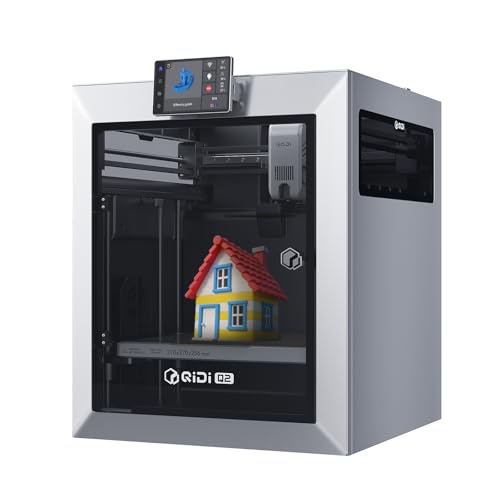
QIDI Q2 integrates full auto-leveling, a 270x270x256 mm build volume, and a 65°C heated chamber. The 600 mm/s peak speed is supported by a rigid full-metal CoreXY frame and precision rails for stable performance at high speeds. Features like AI camera monitoring and power-loss recovery enhance reliability for long prints on polymer-based projects.
Buying Guide: Key Considerations for Polymer 3D Printing
- Auto-Leveling and Bed Calibration: Look for printers that offer reliable automatic bed leveling to ensure consistent first layers, especially when working with ABS, PETG, or composite filaments.
- Build Volume and Footprint: Choose a size that fits your workspace and the largest parts you plan to print. Larger volumes enable functional prototypes but require sturdier frames and better thermal management.
- Extruder Type and Temperature Range: Direct drive and hotend configurations affect compatibility with flexible and high-temperature polymers. A nozzle range from 0.25 mm to 0.8 mm supports a balance between detail and speed.
- Speed vs. Quality: High-speed printing is valuable for rapid prototyping. Ensure the printer maintains layer quality at speed with a stable CoreXY or similar motion system and rigid frame.
- Filament Handling: Consider filament run-out sensors, easy filament loading, and air filtration or enclosure options to improve print reliability and material compatibility in enclosed environments.
- Monitoring and Connectivity: Built-in cameras, Wi-Fi, or USB connectivity help manage prints remotely, vital for long or complex polymer parts.
- Maintenance and Upgrades: Look for swappable nozzles, modular hotends, and community-supported upgrades to extend the printer’s life and capabilities.
- Material Compatibility: For polymer projects, ensure the machine can handle common filaments like PLA, PETG, ABS, Nylon, and composites. Heated beds and enclosed build chambers help with adhesion and warping control.
- Safety Features: Consider enclosed designs, thermal runaway protection, and automatic shutoffs for safer operation with high-temperature materials.
These selections emphasize printers with auto-leveling systems, high-speed capabilities, and robust construction to support polymer printing. When choosing, assess your typical print size, required material variety, and how often you print in high-speed modes versus high-detail modes. This helps balance cost, reliability, and productivity for polymer-focused projects.