Choosing a reliable, fast, and multi-color capable 3D printer is essential for commercial workflows. The following selected models emphasize high-speed printing, stable core XY motion, auto leveling or quick calibration, and multi-color or multi-material capabilities. This guide compares top options tailored for small-to-mid size production, prototyping, and classroom/office environments.
Summary of chosen products:
| Product | Brand | Max Print Size | Key Feature |
|---|---|---|---|
| FLASHFORGE AD5X Multi-Color 3D Printer with IFS | FLASHFORGE | 220x220x220 mm | Four-color printing with Intelligent Filament System |
| FLASHFORGE Adventurer 5M Pro 3D Printer | FLASHFORGE | 220x220x220 mm | 1-click auto bed leveling, high-speed core XY |
| Creality K2 Pro Combo 3D Printer | Creality | 300x300x300 mm | Multicolor with CFS, auto leveling, large build area |
| FLASHFORGE AD5M Pro 3D Printer | FLASHFORGE | 220x220x220 mm | Fully auto calibration, enclosed design, quiet operation |
| Longer LK5 Pro 3 3D Printer | Longer | 11.8×11.8×15.7 in (approx. 299x299x400 mm) | Fully open source, large size, resume printing |
FLASHFORGE AD5X Multi-Color 3D Printer with IFS
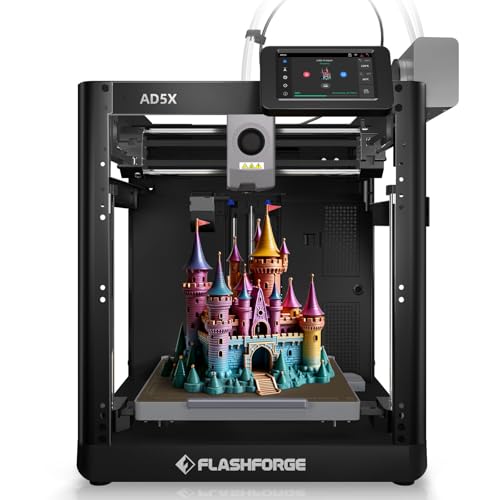
The FLASHFORGE AD5X enables four-color printing through an Intelligent Filament System (IFS), supporting various filament types such as PLA-CF and PETG-CF. It offers auto-loading and an auto refill function up to 4 kg, reducing manual material changes. With a 600 mm/s travel speed and a robust CoreXY all-metal frame, it emphasizes speed and stability for commercial workloads. A 300°C high-temperature nozzle and a large-flow hotend shorten wait times when switching filaments or materials, enabling multi-color or multi-material projects in a production setting.
FLASHFORGE Adventurer 5M Pro 3D Printer

The Adventurer 5M Pro prioritizes efficiency and reliability for professional environments. It delivers up to 600 mm/s travel speed with rapid nozzle heating (about 200°C in 35 seconds), enabling quick turnarounds. The Core XY all-metal frame ensures stability during high-speed movements, while multiple nozzle sizes (0.25–0.8 mm) offer a balance between speed and detail. Automatic bed leveling via multi-point sensing eliminates manual calibration, helping factories and classrooms maintain consistent first layers and reduce downtime.
Creality K2 Pro Combo 3D Printer

The Creality K2 Pro Combo focuses on multicolor printing with the Creality Filament System (CFS), supporting up to 16 colors. It includes auto filament identification and intelligent feeding, moisture-proof storage, and live temperature and humidity display. The build volume is generous at 300×300×300 mm, with a rigid aerospace-grade exoskeleton and dual Z-axis guidance for stable high-speed operation. It achieves up to 600 mm/s print speeds and 20,000 mm/s² acceleration, making it suitable for larger batches and production runs while preserving detail.
FLASHFORGE AD5M Pro 3D Printer

The AD5M Pro combines a fully enclosed, low-noise design with a one-click auto-leveling system. This CoreXY-based machine emphasizes ease of use for both beginners and professionals. The closed chamber and filtration system help optimize air quality during printing, featuring HEPA13 and activated carbon filters to block particulates and VOCs. It is designed for quiet operation and safe, reliable performance in offices or classrooms while maintaining robust print quality at high speeds.
Longer LK5 Pro 3D Printer
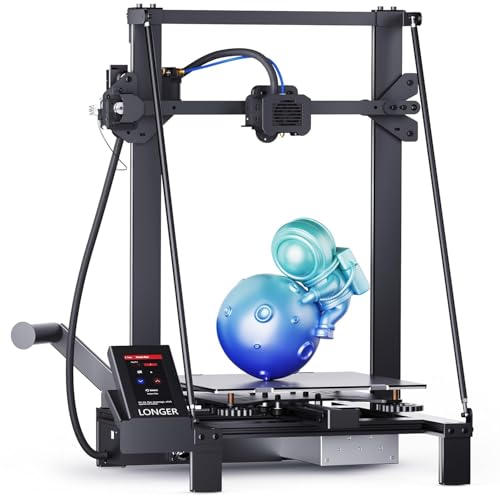
The Longer LK5 Pro emphasizes a stable triangular frame for higher precision and rigidity. It is designed for open-source enthusiasts and educators who want greater configurability. The LK5 Pro supports resume printing after power outages and a generally open approach to firmware customization, appealing to shops and studios that value adaptability and transparency in hardware. It pairs a sizeable build area with dependable performance suitable for over-the-counter prototyping or small production runs.
Buying Guide
- Print speed vs. accuracy: Higher speeds (600 mm/s) can increase throughput but may require better filaments and calibration for consistent quality. Look for printers with robust motion systems (CoreXY or similar) and precise bed leveling.
- Multi-color and multi-material capability: If you plan to run batches with multiple colors or materials, prioritize machines with automatic filament management, reliable multi-filament systems, and clear material profiles.
- Auto leveling and calibration: Automatic bed leveling reduces downtime and labor, especially in a commercial setting where consistency matters for part quality across many prints.
- Build volume: Consider whether 300×300×300 mm or 220×220×220 mm fits your production needs. Larger volumes enable bigger prototypes or multiple parts in a single print run.
- Enclosures and safety: Enclosed designs with air filtration are advantageous in shared spaces, classrooms, or studios. Look for HEPA or carbon-filtered systems if VOC minimization is important.
- Filament ecosystem: Auto-feeding, filament sensors, and access to a broad set of filaments (PLA, PETG, CF composites) improve uptime and material versatility for commercial tasks.
- Software and ecosystem: Compatibility with your preferred slicer, print management, and monitoring tools matters for production efficiency. Systems with reliable firmware support and frequent updates are valuable for long-term use.
- Maintenance and support: For business use, consider the availability of spare parts, service options, and warranty coverage to minimize downtime in production settings.
In summary, the listed models offer a mix of speed, multi-color capabilities, ease of use, and size appropriate for commercial workflows. Your choice should balance print speed with reliability, color or material variety, and total cost of ownership. The AD5X and AD5M families emphasize color versatility and automated workflows, while the K2 Pro series adds a larger build volume and strong multi-filament integration. Long-term, opt for machines with robust support ecosystems, open hardware or clear upgrade paths, and built-in safety features for shared workspaces.