For creators seeking reliable, fast, and feature-rich 3D printers, today’s market offers options that pair automatic bed leveling, high-speed cores, and versatile build volumes. This guide highlights five notable models that are highly available and suitable for both beginners and seasoned users. Each entry includes core features, performance notes, and a practical buying overview to help you pick the right tool for rapid prototyping and creative projects.
Summary Table — Selected Products
| Product | Brand | Build Volume | Key Feature |
|---|---|---|---|
| FLASHFORGE Adventurer 5M | FLASHFORGE | 220x220x220 mm | Fully auto leveling, high-speed coreXY |
| FLASHFORGE AD5X Multi-Color | FLASHFORGE | 220x220x220 mm | 1-Click auto leveling, multi-color printing |
| FLASHFORGE AD5M | FLASHFORGE | 220x220x220 mm | Auto leveling, quick-swap nozzle |
| Creality Ender 3 V3 SE | Creality | Various, up to ~220x220x250 mm | Sprite direct extruder, CR Touch auto leveling |
| Creality Ender 3 (Official) | Comgrow | 8.66×8.66×9.84 in (~220x220x250 mm) | Resume printing, open-source design |
FLASHFORGE Adventurer 5M Auto Leveling

The Adventurer 5M Series emphasizes one-click automated printing with bed leveling to ensure flawless first layers and consistent adhesion. Its CoreXY architecture enables high-speed travel up to 600 mm/s and acceleration around 20,000 mm/s², supporting rapid prototyping without sacrificing precision. A detachable 3S nozzle and a direct extruder reach up to 280°C, expanding compatibility with heat-resistant filaments. The design prioritizes ease of use, with quick nozzle changes and a dual-sided PEI print surface that aids both removal and reliability for diverse projects.
Key considerations include the balance between ultra-fast capability and noise levels in high-speed mode, the longevity of the auto-leveling sensor, and the practical maintenance cycle for changing nozzles. This model is well-suited for makers needing quick iteration cycles and a straightforward user experience in a home or small workshop environment.
FLASHFORGE AD5X Multi-Color 3D Printer

The AD5X adds vivid multi-color printing to the Adventurer family, supporting up to four colors simultaneously. It combines 1-click auto leveling with a CoreXY mechanism capable of speeds up to 600 mm/s, aided by an acceleration profile that favors rapid prototyping workflows. A 300°C direct-drive extruder enhances material versatility, while the 220x220x220 mm build volume keeps prints manageable for batch production or classroom use. The printer’s stable, metal-based frame supports consistent performance in busy environments.
When evaluating, consider color handling needs, filament compatibility, and the level of automation you require for unattended runs. The AD5X is a strong choice for teams that want to explore multi-color concepts or produce varied prototypes without swapping machines.
FLASHFORGE AD5M Auto Calibration and High-Speed Printing

The AD5M is built for speed with a fully automatic calibration system and a CoreXY all-metal motion structure. Its auto leveling precisely measures nozzle-to-build-plate distance, dialing in offsets to produce a flawless first layer. The printer supports high-speed operation (up to 600 mm/s) with a robust platform that minimizes vibrations at speed and provides reliable layer adhesion. A quick-swap nozzle system simplifies maintenance and adapts to changing project needs, while a 220x220x220 mm build area is ideal for quick-turn prototypes and compact industrial parts.
Consider how often you’ll run high-speed sessions and whether you value the quick nozzle swap for different materials. The AD5M’s combination of auto-calibration, speed, and ease of maintenance makes it a practical option for fast-paced product development or classroom demonstrations.
Creality Ender 3 V3 SE

The Ender 3 V3 SE emphasizes a strong balance of speed and reliability with a Sprite direct extruder and a CR Touch auto-leveling sensor. Aimed at faster printing, this model delivers up to 250 mm/s with a robust acceleration profile, which translates to shorter prototyping cycles without compromising print quality. The upgraded extruder design reduces filament feeding issues and improves consistency across filament types such as PLA and PETG. The auto-leveling feature minimizes manual setup, making it accessible for beginners while still appealing to more experienced users who value efficiency.
When selecting this model, assess your preferred filament types, noise tolerance, and the importance of a straightforward assembly-to-print workflow. The Ender 3 V3 SE is a versatile, widely supported option for homes, schools, and makerspaces.
Creality Ender 3 (Official) — Open Source and Resume Printing
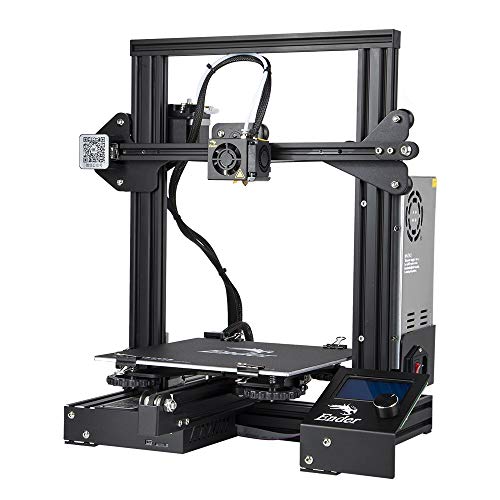
The Ender 3 family is known for open-source flexibility and practical resilience. This model emphasizes resume printing, enabling continuation after power interruptions, which is valuable for longer or more complex builds. Its basic yet reliable design makes it a favorite for students and hobbyists seeking a hands-on learning platform. The printer supports a standard build volume of roughly 220x220x250 mm, which is enough for a wide range of intermediate projects, from functional parts to creative sculptures. The upgraded extruder and smooth motion contribute to consistent results with common filaments.
Potential buyers should weigh the benefits of open-source customization and community support against the learning curve of manual setup. The Ender 3 provides a solid foundation for experimentation and incremental upgrades.
Buying Guide — Key Purchase Considerations and Comparisons
When choosing a 3D printer that’s readily available, consider five core factors: print quality, speed, reliability, ease of use, and future expandability. If speed and minimal tuning are priorities, models with auto leveling and CoreXY motion (such as FLASHFORGE options) offer strong productivity benefits. For beginners, a system with robust auto-leveling and user-friendly interfaces reduces setup time and frustration. Open-source printers, like the Ender 3 family, excel for DIY enthusiasts who want to customize hardware and firmware, but may require more hands-on setup.
Build volume should align with your typical projects. A 220×220 mm footprint is common and versatile for both small functional parts and mid-sized prototypes. Consider extruder type and maximum nozzle temperature to ensure material compatibility (PLA, PETG, ABS, and some high-temp filaments). Auto-leveling sensors save time and improve first-layer reliability, which is crucial for successful prints in home environments.
Maintenance and modularity matter in the long run. Quick-change nozzles, removable build plates, and a stable frame reduce downtime and support more complex print jobs. Finally, assess total cost of ownership, including spare parts, filament availability, and community support that helps you troubleshoot and optimize performance.
In summary, the five featured models provide a spectrum of capabilities—from high-speed CoreXY systems with auto-leveling to open-source platforms ready for customization. Your choice should reflect your intended use, whether it’s rapid prototyping in a workshop, classroom demonstrations, or home hobby projects.