Finding the perfect 360 camera for skiing means balancing ruggedness, low-light performance, stabilization, and easy reframing in the backcountry. This guide highlights five top options that excel on snowy slopes, whether you’re carving powder, racing berms, or capturing scenic chairlift views. Each pick brings unique strengths—from high-resolution 360 capture to advanced stabilization and AI-assisted tools—so you can choose the right model for your snow-bound storytelling.
| Product | Brand | Key Benefit |
|---|---|---|
| Insta360 X5 | Insta360 | 8K30fps with triple AI processing for low light |
| Insta360 X5 Essentials Bundle | Insta360 | All-in-one 8K setup with added versatility |
| GoPro MAX | GoPro | Versatile 360 plus traditional action modes |
| DJI Osmo 360 Camera | DJI | 1-Inch sensor with native 8K 360 video |
| AKASO 360 Weatherproof | AKASO | 5.7K 360 with horizon lock and AI tracking |
Insta360 X5

The Insta360 X5 uses dual 1/1.28″ sensors to deliver 8K30fps 360° video, offering sharp detail and robust color in a compact, rugged body. Its triple AI chip design improves noise reduction and image processing, helping when you’re filming in snowy, dim light conditions. An invisible selfie stick feature lets you frame shots without the pole appearing in the final footage, perfect for immersive viewpoints on windy chairlift rides or downhill runs. A replaceable lens and built-in wind guard add durability for cold-weather adventures.
Insta360 X5 Essentials Bundle

The Essentials Bundle adds value with the same high-end 8K30p capability and low-light performance, plus AI-powered reframing to select camera angles after the shoot. The bundle’s rugged design handles cold conditions, and its wind guard minimizes outdoor noise during fast descents. The combination suits skiers who want flexible post-production options without sacrificing on-slope footage quality.
GoPro MAX

The GoPro MAX combines 360 capture with traditional action camera modes, making it a flexible option for skiers who want both panoramic views and standard clips in one device. It records 5.6K30 spherical video and 3K60 slow motion, which is helpful for dramatic action sequences on tight trails. The GoPro Quik app enables easy reframing, while Stealth Mounting features let you capture pole-free shots that feel shot by a separate observer. The camera’s stabilization helps keep footage steady on rough snow.
DJI Osmo 360 Camera

DJI’s Osmo 360 Camera emphasizes a 1-inch sensor for improved low-light performance, delivering 8K 360° video and 105GB built-in storage. This model is designed for sports use, with a focus on color fidelity and detail in variable lighting—common on late-day runs and cloudy ski days. Users benefit from extended battery life and high-detail panoramic footage suitable for sharing on social platforms or archival thoughts of an epic run.
AKASO 360 Weatherproof

The AKASO 360 Weatherproof camera records in 5.7K with a 360° field of view and uses AI tracking plus horizon lock to stabilize footage amid rapid movement and hasty turns. Its weatherproof design is well suited to snow days, and the in-camera stabilization helps maintain smooth footage without a gimbal. This option balances performance and affordability for skiers who want reliable 360 footage in varied weather conditions.
AKASO 360 Weatherproof Creator Combo
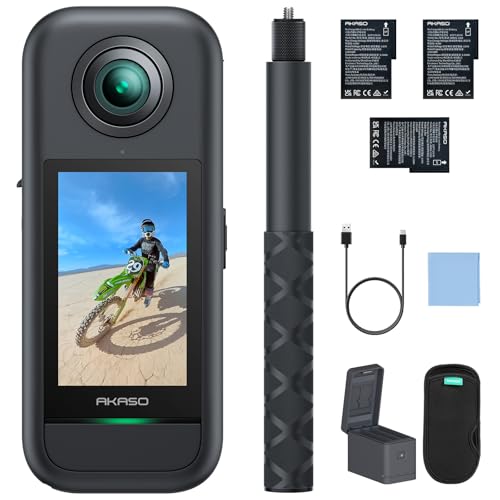
The Creator Combo expands the weatherproof 360 experience with additional AI tracking and a broader sensor array, enabling more versatile shooting angles on the ski slopes. The kit’s extended feature set supports creators who want more control over framing, motion, and stabilization, especially when recording on lift rides or windy peaks where gusts can affect stability.
Buying Guide
- Low-light performance: Ski lighting can be flat, especially during cloudy days or twilight runs. Look for cameras with large sensors, fast apertures, or AI-based noise reduction to preserve detail in dim conditions.
- Stabilization: Snow and ice produce unpredictable motion. Choose a 360 camera with advanced stabilization (gimbal-like or horizon lock) to minimize shakiness in panoramic footage.
- Resolution and frame rate: For epic mountain footage, 8K capture at 30fps or higher allows flexible reframing. Consider higher frame rates (4K/120fps) for slow-motion sequences of jumps and turns.
- Weight and durability: Powder runs demand rugged, weatherproof bodies. If possible, pick a model with a solid water- and dust-resistant rating and a replaceable lens or protection for cold environments.
- Post-production flexibility: Reframing after the fact saves time. Cameras with AI-assisted reframing or seamless editing apps help you craft compelling stories from single 360 takes.
- Stringency of accessories: A comprehensive bundle—mounts, protective housing, and wind guards—can expand mounting options on helmets, chests, or poles and improve audio capture in windy conditions.
- Storage and battery life: Ensure built-in storage or expandable options and sufficient battery life for long ski days. Some models offer dual or extended battery packs for backcountry use.
- Price vs. value: Higher-end models provide better low-light performance and stabilization but come at a premium. Weigh workflow needs against budget to pick the best value for skiing content.
When choosing a 360 camera for skiing, consider whether you value ultimate image quality, post-production flexibility, or a compact, all-in-one solution. The five picks above cover a spectrum from specialized 8K capture with AI processing to adaptable, action-ready setups. Depending on your preferred shooting style—whether you want immersive seat-of-the-pants POVs or polished, reframe-ready footage—there is a model that fits your backcountry storytelling needs.