For accurate translation of your recordings, a solid set of 3-way studio monitors is essential. This guide highlights five top options geared toward American home studios and professional spaces alike. Each pick delivers a distinct combination of drivers, power, and room-control features to help you achieve precise imaging, deep bass, and clear mids and highs across diverse genres.
| Product | Brand | Key Features |
|---|---|---|
| Kali Audio IN-5 | KALI AUDIO | 5″ woofer with coaxial midrange/tweeter, boundary compensation EQ, versatile inputs |
| Kali Audio IN-8W V2 | KALI AUDIO | 8″ woofer, 3-way design, 150W class D amp, precise controls |
| Edifier MR5 | Edifier | 3-way system, 110W, room compensation, multiple inputs |
| ADAM Audio A8H-R | ADAM AUDIO | 8″ LF, 3-way, onboard DSP, right channel |
| Cerwin Vega VEGA10SB-PR | Cerwin Vega | 10″ full-range, DSP, Bluetooth, wireless connectivity |
Kali Audio IN-5 5″ Powered 3-Way Studio Monitor
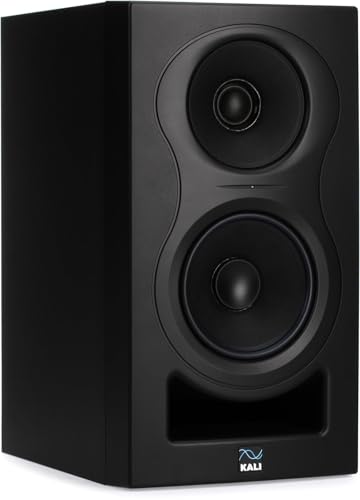
The Kali Audio IN-5 delivers a compact 3-way design with a coaxial midrange and tweeter, yielding hyper-realistic imaging and a transparent soundstage. This setup emphasizes punch and detail while lowering distortion, making it well-suited for small to medium control rooms where accurate mid and high frequencies matter. Its boundary compensation EQ helps tailor the monitor to near-wall deployments, a common scenario in home studios.
Key strengths include a focused, open soundstage, strong imaging, and straightforward input options (XLR, TRS, RCA) for flexible integration with various interfaces. The IN-5 favors mixing and monitoring tasks that require precise localization of instruments and voices. Users seeking a smaller footprint with studio-grade clarity should consider this model as a primary option.
Kali Audio IN-8W V2 8″ Powered 3-Way Studio Monitor

The IN-8W V2 expands to an 8″ woofer while preserving Kali’s 3-way architecture. It uses a 150W class D amplifier to deliver clean, loud output with extended low end and ample headroom for mastering and mixing. Independent level controls, low-cut filters, and input selection enable precise customization to suit room acoustics and personal listening preferences. This model is aimed at mid-to-large rooms and users who require tight bass response and articulate highs.
In practice, engineers value its robust low-end extension without overpowering the midrange, along with straightforward room tuning options. The IN-8W V2 is a strong choice for projects that demand studio-reference accuracy and flexibility across a range of genres and production styles.
Edifier MR5 2.0 Studio Monitor Bookshelf Speakers

The Edifier MR5 presents a 3-way active design in a compact bookshelf form factor, delivering studio-grade sound in a home setup. Its 46Hz–40kHz frequency range supports detailed highs and effective low-frequency response, aided by a 5″ woofer, a 3.75″ mid driver, and a 1″ silk dome tweeter. Built-in room compensation controls and a dedicated app enable room tuning and desktop management for more accurate mixes.
Multiple input options (XLR, TRS, RCA) provide versatile connections to audio interfaces and mixers. The MR5 is particularly suited for bedroom studios, desktops, and small production spaces where space constraints require efficient yet capable monitoring that remains faithful to source material.
ADAM Audio A8H-R 8-inch 3-Way Powered Studio Monitor

The ADAM A8H-R offers an 8″ low-frequency driver and a 3-way configuration with onboard DSP on each monitor. This right-channel model emphasizes precise control over the signal chain, enabling accurate imaging across the frequency spectrum. The DSP processing supports tonal shaping and calibration to help meet room-specific challenges, making it suitable for professional studios where reference-grade accuracy is required for mixing, mastering, and critical listening tasks.
Audiences looking for a high-fidelity, monitor-wide response in a focused, professional package will find the A8H-R aligns with industry-standard expectations for detail and clarity, especially in mid-to-high-frequency accuracy and consistent stereo imaging.
Cerwin Vega VEGA10SB-PR 10″ 3-Way Studio Monitors

The VEGA10SB-PR combines a 10″ woofer with a 3-way configuration and onboard DSP for full-range monitoring across genres. Bluetooth 5.0+ and SKAA wireless technology add flexible connection options for auxiliary devices, enabling a versatile workflow in modern studios that blend wired and wireless setups. Real-time mixing capabilities and room adaptation features are part of the package, aiding in accurate translation from the mixing environment to consumer playback systems.
Engineers value the VEGA10SB-PR for its broad frequency capability, room-friendly DSP adjustments, and easy integration into multi-room or near-field configurations. It’s a strong option when you need a large-monitor presence with robust control over sound shaping and connectivity.
Buying Guide: Key Purchase Considerations
- Room size and listening position: 3-way designs excel in mid-to-large rooms where clear separation of drivers helps manage bass, mids, and highs. In smaller spaces, consider models with boundary compensation and adjustable high/low filters to tailor the response.
- Driver configuration: Coaxial midrange/tweeter (as seen in Kali IN-5) can improve imaging and depth perception, while separate mid/woofer/tweeter arrangements offer traditional crossovers and often broader tonal control.
- Power and headroom: Look for monitors with ample amplifier power for your room to avoid late-day clipping or tonal flattening at high levels. Independent level controls and input flexibility support precise calibration.
- Room treatment and bass: For tight bass and accurate low-end, consider monitors with boundary compensation EQ or integrated room-compensation features. Pair with acoustic treatment for best results.
- Connectivity: Ensure compatibility with your audio interface (XLR, TRS, RCA). Wireless options can add convenience but verify latency and audio quality if used for critical work.
- DSP and calibration: Onboard DSP and calibration software help tailor frequency response and imaging to your room, reducing the guesswork in setup.
- Support and service: Brands offering regular firmware updates and reliable customer support can be advantageous for long-term usability and performance.
Choosing the right 3-way studio monitor involves balancing room size, workflow needs, and tonal preferences. The selections above span compact near-field monitors and larger, room-ready systems, providing options for mixing, mastering, and general production work. By comparing driver arrangements, amplification, and room-tuning capabilities, you can identify the model that best aligns with your projects and listening goals.