Answering the search for reliable 128GB SSD options, this guide highlights top internal and external drives suited for upgrading laptops, desktops, and all-in-one PCs. Best for budget-conscious users needing a quick speed boost, or creators and IT pros upgrading older systems, these picks balance performance, endurance, and value. The following five products offer solid read speeds, practical capacity, and dependable 3D NAND technology to extend everyday usability without breaking the bank.
| Product | Type | Capacity | Key Speed (Max Read) |
|---|---|---|---|
| KEXIN SSD 128GB | Internal 2.5″ SATA III | 128 GB | Up to 450 MB/s |
| Fikwot FS810 128GB | Internal 2.5″ SATA III | 128 GB | Up to 560 MB/s |
| fanxiang S101 128GB | Internal 2.5″ SATA III | 128 GB | Up to 500 MB/s |
| Patriot P210 128GB | Internal 2.5″ SATA III | 128 GB | Read up to 450 MB/s |
| Lexar D50E 128GB | USB Solid State Drive | 128 GB | Up to 400 MB/s |
KEXIN 128GB SATA III Internal SSD

KEXIN’s 128GB 2.5-inch SATA III SSD is designed for straightforward laptop and desktop upgrades. It targets users seeking a simple, affordable path to faster boot times and snappier file access. Best for budget upgrades in older laptops or all-in-one systems where space is a factor.
Best for: budget-conscious laptop owners and small-form PC upgraders who need a reliable speed boost without changing form factors.
Why selected: It uses 3D NAND for better endurance and provides a solid 450 MB/s read speed, delivering noticeable performance gains over HDDs in everyday tasks.
Caution: As an entry-level 128GB option, total write endurance may be lower than higher-capacity drives with the same NAND type; good for light to moderate daily use.
Fikwot FS810 128GB SSD

Fikwot FS810 is a 128GB SATA III SSD designed for desktops and laptops needing a quick upgrade path. It reaches up to 560 MB/s read speeds, making it one of the faster 128GB options in this list. Best for users who want the maximum observed read speed within a compact 128GB capacity.
Best for: users prioritizing higher read speeds for quicker booting and faster application loading on a tight budget.
Why selected: 560 MB/s sequential read offers a noticeable performance uplift over conventional HDDs and some lower-end SSDs in the same capacity.
Caution: 128GB capacity is relatively small for modern software environments; consider pairing with larger-capacity drives if you store many large files or applications.
fanxiang S101 128GB SSD
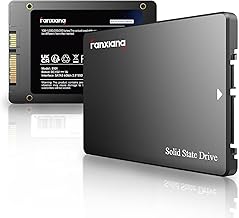
fanxiang S101 targets everyday users seeking a straightforward upgrade for speed and reliability. It offers up to 500 MB/s read speeds and uses 3D NAND TLC, balancing durability with cost. Best for general owners who want a predictable, no-frills performance boost.
Best for: home users, students, and professionals who need faster system responsiveness without specialized requirements.
Why selected: The combination of SATA III performance and 3D NAND TLC provides reliable daily-use performance and a lower price point.
Caution: Small 128GB capacity may require regular cleanups or external storage for larger media collections or multi-application workloads.
Patriot P210 128GB

Patriot P210 128GB is a compact internal upgrade option with SATA 3 performance. It features end-to-end data path protection and SmartECC technology to help guard against data errors during operation. Best for users who want dependable protection alongside solid performance.
Best for: users needing a balanced mix of speed and data integrity features in a 128GB form factor.
Why selected: The drive pairs a straightforward interface with data protection features and respectable read speeds around 450 MB/s.
Caution: Limited capacity means it’s not ideal for stores of large applications or media libraries; plan for external or cloud storage for heavier files.
Lexar D50E 128GB USB SSD

Lexar D50E 128GB USB SSD offers portable storage with a USB-C and USB-A interface. Best for users who want a compact external 128GB SSD for quick transfers between devices or as a fast scratch disk. Note that this is external storage, not an internal SATA drive.
Best for: students and professionals who need portable storage that travels with a laptop or tablet.
Why selected: The dual USB interface and metal housing provide convenient, durable external storage with solid read/write performance for a portable solution.
Caution: Not suitable as an internal drive replacement inside laptops or desktops where a 2.5″ SATA form factor is required.
Buying Guide: 128GB SSD Drive Essentials
What to consider when choosing
- Form factor and interface: Internal 2.5″ SATA III drives fit most laptops and desktops; external USB SSDs offer portability.
- Performance: Look for sequential read speeds around 450–560 MB/s for typical 128GB SATA SSDs; higher is better for boot times and app loads.
- Endurance and NAND type: 3D NAND TLC drives provide better endurance than older 2D NAND; this matters for daily writes over years.
- Capacity implications: 128GB is suitable for OS and essential programs, but may require external storage for large libraries or games.
- Reliability features: End-to-end data protection, ECC, and wear-leveling improve data integrity and drive longevity.
Best practices for upgrades
- Back up data before installing a new drive and clone the OS if you want to keep your current setup.
- Check compatibility with your device’s BIOS/UEFI and available drive bays or USB ports.
- Consider using the 128GB SSD as the primary OS drive for faster boot times, with data stored on larger secondary drives.
FAQ
- Is a 128GB SSD enough for Windows 10/11? It can be sufficient for a lightweight OS installation with essential apps, but many users prefer larger capacities for comfort and future needs.
- Are 128GB drives slower than larger SSDs? Speed can be similar across capacities in the same model family; the main difference is total write endurance and available space.
- What’s the difference between internal and external 128GB SSDs? Internal drives replace or upgrade internal storage; external drives provide portable storage via USB.
- Can these 128GB drives upgrade a laptop? Yes, most 2.5″ SATA III drives fit standard laptops with a compatible drive bay and connector.
- What should I upgrade first: RAM or SSD? For system responsiveness, upgrading to an SSD typically yields bigger performance gains, especially on older systems; RAM helps multitasking and workloads.
- Is 128GB SSD suitable for gaming? It can be used for a game library but may require frequent external storage or data management due to size limits.