Find the right 12 inch subwoofer box for your vehicle with this guide. Each option is selected to suit different goals—tight sealed bass for clarity, vented boxes for louder, deeper thump, and dual-chamber designs for even distribution of bass across a stereo system. This article helps budget-conscious buyers, DIY installers, and audio enthusiasts choose the best fit for their ride. Below, you’ll see five top choices, each with a quick snapshot of who it’s best for and why it stands out. A quick at-a-glance buying table follows the introduction.
| Product | Enclosure Type | Air Space | Best For |
|---|---|---|---|
| QPower 12 Inch Dual Subwoofer Box | Dual Vented | Two chambers | Two subs, loud, street-ready bass |
| QPower Single Car Audio Subwoofer Box (12″) | Single Vented | 1.65 cu ft | One sub, balanced bass and heat management |
| Q Power Dual 12-Inch Heavy Duty Ported Box | Dual Ported | 1.6 cu ft per chamber | Deep bass across two subs, shared venting |
| Q Power 12 Inch Heavy-Duty Single Sealed Box | Sealed | 1.2 cu ft | Precise, tight bass for small to mid-size subs |
| Qpower Single 12″ Vented Ported QBOMB12VL | Single Ported | Single vented chamber | Deep bass with simple setup |
Note: Each product is described with its stated features and typical use cases. The table above highlights enclosure type, air space, and who to consider for best results. If you want the most depth, look for vented designs; if you value accuracy and tight control, sealed enclosures can be ideal. For multi-sub systems, dual-chamber designs often balance loudness with reliability.
QPower 12 Inch Dual Subwoofer Box

This dual-vented enclosure is designed to hold two 12-inch subwoofers (not included) and is engineered for strong bass and smooth audio. The dual-chamber design aims to deliver louder output while maintaining sound quality. Best for buyers who want to upgrade a two-sub system in a truck or SUV and enjoy a robust bass footprint. A notable limitation is that it requires space to accommodate two 12-inch drivers.
QPower Single Car Audio Subwoofer Box

Designed to hold one 12-inch subwoofer, this enclosure provides 1.65 cubic feet of air space for enhanced bass response and reduced vibration. The MDF construction supports portability and heat management with a vented design to improve bass performance. Best for listeners who want a straightforward, single-sub upgrade and reliable airflow to protect speaker performance. A potential limitation is that it’s not ideal for installations requiring two subs.
Q Power Dual 12-Inch Heavy Duty Ported Box
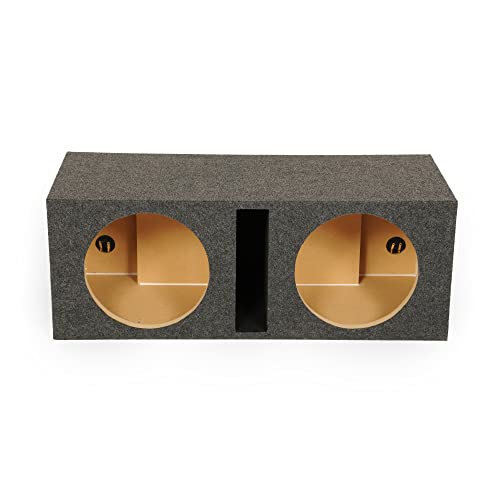
This dual-sub enclosure uses separate chambers (each 1.6 cu ft) and a single shared slot vent. The design aims to deliver deep bass across a full system while maintaining temperature control and structural integrity under heavy bass output. Best for users who want two subs with strong, deep bass but without multiple vents complicating the airflow. A caution is that space and mounting can be more demanding in smaller vehicles.
Q Power 12 Inch Heavy-Duty Single Sealed Box

This sealed enclosure offers 1.2 cubic feet of air space, built with heavy-density MDF and charcoal carpeting. The sealed design prioritizes tight, accurate bass with minimal morethbass coloration, making it suitable for smaller subwoofers or for listeners who want precise audio performance. Best for sound purists who prefer controlled bass rather than maximum output. A limitation is that sealed boxes typically produce less raw bass than vented designs at higher volumes.
Qpower Single 12″ Vented Ported QBOMB12VL

This single-vented ported enclosure is built for deep bass with a simple setup. Constructed from solid MDF and featuring a high-quality terminal, it emphasizes airflow to enhance low-frequency output. Best for a straightforward upgrade where a single 12-inch sub is desired, and users want strong bass without needing two separate chambers. A caveat is that vented designs require ample mounting depth and space for optimal performance.
Buying Guide
What enclosure type should you choose?
- Sealed enclosures deliver tight, accurate bass with minimal sound coloring. They’re ideal for smaller subwoofers or listeners who prize precision over maximum volume.
- Vented (ported) enclosures enable louder bass and deeper extension at the cost of slightly slower transient response. They’re best for bigger subwoofers and systems designed for stand-out low-frequency impact.
- Dual-chamber enclosures pair two subs with separate air spaces, offering balanced performance and reduced mutual interference. This works well for multi-sub configurations in trucks and SUVs.
How much air space do you need?
- Higher air space generally supports louder bass and lower frequency extension, but it also requires more mounting depth and space in the vehicle.
- Smaller air space can provide tighter, more controllable bass—especially with sealed designs—and is easier to fit in compact vehicles.
What about installation considerations?
- Ensure mounting depth and enclosure width match your vehicle’s cargo area and seat configuration. Measure available space before purchase.
- Vent placement and port tuning influence bass response. A poorly tuned vent can cause chuffing noises or heat buildup.
- Quality MDF construction and secure mounting prevent vibration-induced rattles. Look for sturdy construction and solid carpet or finish.
Stock versus aftermarket fitment: If you’re replacing factory subwoofers, check compatibility with your vehicle’s electrical system, trunk or cargo area, and any existing wiring harnesses. For multi-sub configurations, dual-chamber enclosures can help balance the soundstage without overloading a single box.
Frequently Asked Questions
- What is the difference between sealed and ported subwoofer boxes? Sealed boxes give tight bass with high accuracy, while ported boxes provide louder, deeper bass but can be less precise at extreme volumes.
- Do I need to match the enclosure size to my subwoofer? Yes. Use the recommended air space for your sub and ensure the box fits inside your vehicle’s space constraints.
- Can I install two subwoofers in a single box? Yes, with a dual-chamber or dual-sub enclosure designed to hold two 12-inch drivers, ensuring proper venting and heat management.
- Is MDF a good material for subwoofer boxes? MDF is commonly used due to its density and stability; a well-constructed MDF enclosure minimizes chassis flex and rattles.
- Do vented boxes require more mounting depth? Often yes, because the port and internal chambers add depth. Check the product dimensions before buying.
- How do I choose the right tuning frequency for a ported box? Port tuning around 34–42 Hz is common for deep bass in many systems; however, the ideal tuning depends on your subwoofer and listening preferences.