Looking for a reliable 1080p screen recorder or capture device to preserve video from various sources? This guide highlights five capable options, each suited to different needs—from classrooms and live events to gaming and dash camera setups. Whether you want no-computer recording, flexible inputs, or portable monitoring, the selections below help you compare features, inputs, and practical use cases.
Summary of chosen products (quick reference):
- UNISHEEN Video Recorder 1080P 60FPS USB2.0 — Best for beginners needing driver-free setup and a built-in screen for on-the-spot monitoring.
- Fonykadpt Body Camera with Audio and Video Recording 1080P — Best for on-the-go recording with a compact body and rotation lens.
- kimire Video Camera Camcorder Digital Camera — Best for versatile camcorder features and webcam capability.
- SUIKUI RH35 Unlimited Recording Camera Monitor 1080P — Best for camera monitor functions with professional-looking controls.
- 1080P HDMI Video Capture Card (MYPIN) — Best for console and PC capture with mic input for commentary.
UNISHEEN Video Recorder 1080P 60FPS USB2.0
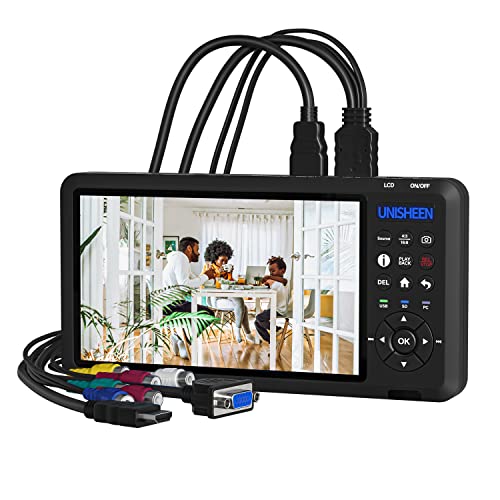
The UNISHEEN UR500A is a driver-free, all-in-one HDMI/DVI/VGA inputs device designed to capture 1080p60 video with audio from legacy sources such as VCRs and camcorders. It records to SD cards or USB storage and can live stream via USB on Windows, Mac, or Linux. This makes it ideal for educators, event organizers, and hobbyists who want a straightforward, plug-and-play capture workflow without a computer tether.
Best for: Beginners and field operators who need a simple, portable capture setup with a built-in preview screen. It suits classrooms, weddings, sports events, and DIY video projects where quick setup matters.
Why selected: It combines multiple inputs (DVI, HDMI, CVBS, VGA, YPBPR) with a 7-inch LCD for real-time preview, reducing the need to switch devices or rely on external monitors during capture.
Caution: While it records to USB drives or SD cards, users should verify drive compatibility and format (not all USB drives work reliably with every device).
Fonykadpt Body Camera With Audio And Video Recording
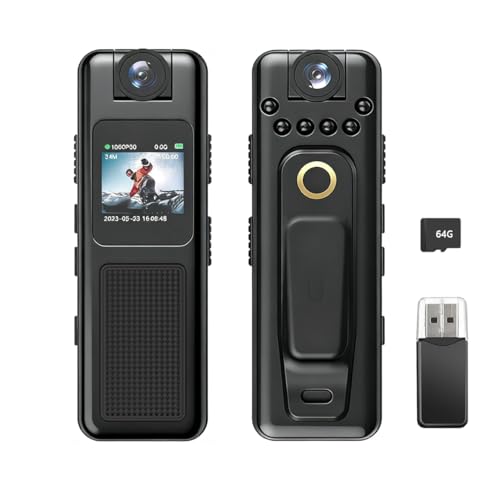
This compact 1080p body-worn camera provides 1080P video, audio recording, 180° lens rotation, and night vision. It comes with a 64GB TF card and a magnetic suction base for easy mounting on clothing, desks, or other surfaces. Its versatile use cases include meetings, lectures, and on-the-go documentation where discreet capture is valuable.
Best for: Professionals or students needing a lightweight, portable recorder for meetings, fieldwork, or classroom documentation where hands-free operation is useful.
Why selected: The rotating lens and night-vision capability broaden recording scenarios beyond standard point-and-shoot footage, while the included TF card reduces setup friction.
Caution: Battery life and continuous-record duration should be considered, as compact devices can require frequent recharging for longer sessions.
kimire Video Camera Camcorder Full HD 1080P
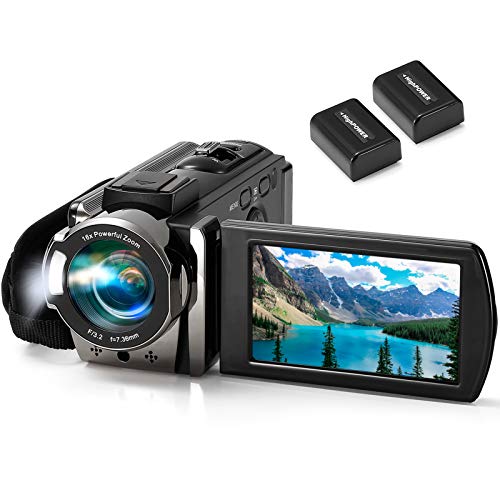
The kimire camcorder offers 1080P video at 15fps with a 24MP image sensor, a 3.0-inch LCD with 270° rotation, and a 16x digital zoom. It supports a webcam mode via AMCAP software and includes USB 2.0 and TV output, making it a flexible choice for online content creators, hobbyists, and educators who want a single device for photos, video, and streaming.
Best for: Content creators who want a multifunction device capable of acting as a webcam and capturing high-quality video and photos in varied formats.
Why selected: The camera’s rotation, pause function, and webcam compatibility make it a strong “all-in-one” option for creators needing quick transitions between shooting, streaming, and editing.
Caution: The frame rate is modest (1080P at 15fps); motion-heavy footage may appear less smooth compared with higher fps models.
SUIKUI RH35 Unlimited Recording Camera Monitor
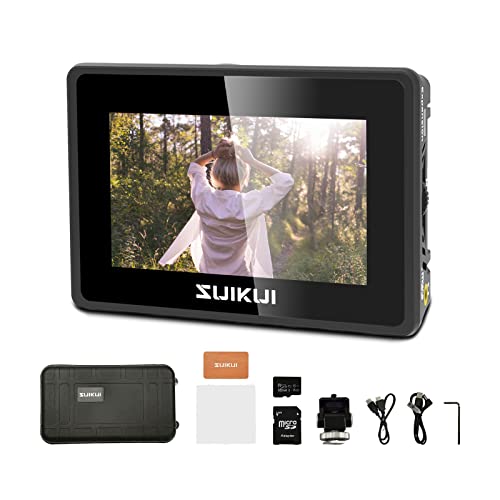
The SUIKUI RH35 provides 1080p60 recording via HDMI input/output and uses H.264 encoding for MP4 files stored on micro SD cards. Its 3.5-inch preview LCD, and a range of camera-oriented tools (peaking, zebra, waveform, focus assist, exposure, false color) make it well-suited as a field monitor and small-capacity recorder for filmmakers or videographers working in constrained environments.
Best for: Videographers who need a compact, feature-rich monitor/recorder with on-screen exposure tools and a straightforward workflow for handheld or tripod-mounted shoots.
Why selected: The integrated professional tools help capture precise exposure and focus decisions on the go, without requiring a full external rig.
Caution: The device records to micro SD cards—use a high-quality card with sufficient write speed to avoid dropped frames in 1080p60 recording.
1080P HDMI Video Capture Card (MYPIN)
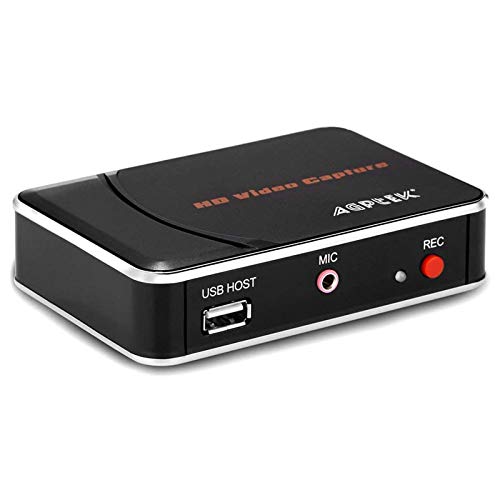
The MYPIN capture card records 1080P HDMI output to USB storage, supporting 128GB USB drives and up to 2TB hard drives (MBR) and USB 3.0. It includes a microphone input for commentary, enabling simple voiceover during gameplay or live events. It does not support live streaming through OBS or similar software in its listed capabilities, so it’s best for straightforward capture to USB storage and later editing.
Best for: Gamers and streamers who want a plug-and-play capture solution that stores directly to USB storage for quick sharing or archival without a PC-based workflow.
Why selected: The direct-to-USB approach simplifies portability and reduces computer processing steps for quick capture of high-definition gameplay or video content with optional mic input.
Caution: This device does not support live streaming to software platforms in its standard mode, so users who need real-time broadcasting should consider alternative options or additional software support.
Buying Guide: How to Choose a 1080p Screen Recorder
- Input versatility: If you need to capture from legacy devices, look for models with HDMI, DVI, VGA, CVBS, and component inputs. For gaming or modern devices, HDMI input is essential.
- Storage and portability: Decide between internal SD/USB storage and external drives. Portability favors compact designs with a built-in screen for on-site checks.
- Recording format and quality: For 1080p60, ensure the device supports 60 frames per second and H.264 encoding for efficient files. Consider MP4 as a standard delivery format.
- Ease of use: Driver-free or plug-and-play devices reduce setup friction. Built-in preview screens help verify framing and focus without a PC.
- Webcam and streaming needs: If live streaming or webcam integration is required, check whether the device supports OBS or direct camera-to-computer capture with appropriate software.
- Mounting and mobility: For field work or on-the-go usage, a compact form factor with reliable mounting options (magnetic bases, clamps) improves workflow.
- Limitations to watch for: Some devices lack live streaming, or have limitations on mic input or data transfer speeds. Verify drive compatibility and supported file formats before purchase.
Frequently Asked Questions
- What is a 1080p screen recorder used for?
A 1080p screen recorder captures high-definition video from cameras, game consoles, or other HDMI/DVI/VGA sources and stores it locally or streams it. It’s useful for education, content creation, gameplay capture, and event recording.
- What should I look for in a driver-free recorder?
Seek models that offer plug-and-play setup, built-in previews, multiple inputs, and reliable storage options to avoid complex installation steps.
- Are internal storage options better than external drives?
Internal storage is convenient for portable use, while external drives provide larger capacities and easier backup. Choose based on your expected capture length and mobility needs.
- Can these devices act as webcams?
Some camcorders offer webcam modes via software, enabling live streaming. Check product features for webcam compatibility and required software (e.g., AMCAP).
- Is 1080p60 necessary for all uses?
1080p60 provides smoother motion, beneficial for fast action or gaming. For talking-head videos or lectures, 1080p30 may be sufficient.
- What common limitations should I expect?
Not all devices support live streaming, some require specific storage formats, and certain inputs may be limited in resolution or frame rate depending on source compatibility.