Looking for an affordable, reliable audio interface under $100? This guide highlights consumer-friendly models that deliver solid studio sound for guitarists, vocalists, podcasters, and content creators. Each option balances cost with practical features like phantom power, multiple inputs, and low-latency monitoring. The top picks are chosen for ease of use, compatibility with Windows and macOS, and suitability for beginners and hobbyists alike.
Summary at a glance:
- Focusrite Scarlett Solo (3rd Gen) — Best for solo vocal or guitarists needing clean pre-amps and portable use.
- Focusrite Scarlett Solo (4th Gen) — Best for budding songwriters seeking higher dynamic range and Air mode clarity.
- HOSONGIN USB Interface — Best value starter kit with plug-and-play setup.
- M-Audio M-Track Duo — Best for flexible I/O and versatile monitoring in a budget package.
- Scarlett 2i2 (4th Gen) — Best for dual-mic or dual-instrument needs with automatic gain and safety features.
Focusrite Scarlett Solo 3rd Gen USB Audio Interface

The Focusrite Scarlett Solo 3rd Gen delivers pro-grade pre-amps and a bright-sounding Air mode for acoustic instruments. It’s ideal for solo vocal or guitar recordings where compact size and reliable software integration matter. The unit supports up to 24-bit/192kHz conversions for clean capture and straightforward playback, making it well suited for podcasting, home recording, and streaming.
Best for: Solo singers, guitarists, small-project podcasters who want clear, distortion-free tracks with easy setup.
Limitations: Only one microphone input limits multi-person recording sessions.
Focusrite Scarlett Solo 4th Gen USB Audio Interface

The 4th Gen Solo expands on the previous design with a broader dynamic range (120dB total) and Air mode that enhances vocal and guitar presence. It’s a strong upgrade option for writers and performers aiming for studio-like results in a compact interface, with software bundles that streamline the initial setup and workflow.
Best for: Songwriters and solo artists who want more headroom, clearer vocal presence, and a ready-to-record setup.
Limitations: Still a single-channel mic input, which may frustrate multi-voice recording projects.
HOSONGIN USB Audio Interface for Beginners

This new-red-metal beginner interface emphasizes plug-and-play simplicity. It supports 24-bit/192kHz recording, provides phantom power, and includes a versatile XLR/TRS combo input. It’s designed for newcomers who want quick setup for podcasts, vlogs, vocals, and guitar work without drivers or extensive configuration.
Best for: New creators seeking a straightforward entry point with immediate, broadcast-quality results.
Limitations: Being targeted at beginners, it may lack advanced routing options or extensive software bundles found in higher-end models.
M-AUDIO M-Track Duo USB Audio Interface

The M-AUDIO M-Track Duo focuses on two-channel versatility with dual XLR/Line/DI inputs and a software bundle. It provides 48kHz recording resolution, zero-latency monitoring, and flexible output options for streaming, podcasting, and music creation. This is a practical option for small studios needing multiple input choices without breaking the bank.
Best for: Small-band setups, podcast hosts, and solo artists who need two inputs and reliable monitoring in a compact package.
Limitations: The build and feature set are modest compared to top-tier interfaces, which may matter for future-proofing as needs grow.
Focusrite Scarlett 2i2 4th Gen USB Audio Interface
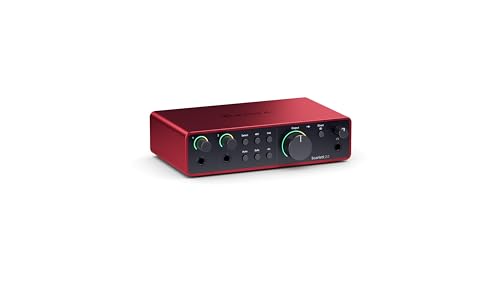
The Scarlett 2i2 4th Gen offers two combo inputs with high-fidelity mic pre-amps and a broad dynamic range (120dB), plus Auto Gain and Clip Safe features to simplify recording. It’s a versatile choice for dual-vocal or dual-instrument setups, streaming, and podcasting, with included software to get started quickly.
Best for: Duos or two-instrument/vocal recordings, small bands, and creators who want a balance of inputs and reliable gain management.
Limitations: Not ideal for users needing more than two inputs or extensive software control on day one.
PreSonus AudioBox 96 Anniversary USB Interface

The PreSonus AudioBox 96 provides two Class-A preamps and a pair of high-headroom instrument inputs, plus MIDI I/O for basic gear expansion. It’s a value-packed option for personal and portable recording with Studio One Artist included, making it a practical all-in-one setup for beginners and hobbyists.
Best for: Home studios that want two-mic capability and basic MIDI integration without a large upfront investment.
Limitations: The bundled software is limited to entry-level DAW features, which may require later upgrades for advanced production workflows.
Synido USB C Audio Interface (2×2)

The Synido 2×2 interface uses a dedicated audio chip to reduce latency and supports 24-bit/48kHz. It features three monitoring modes to accommodate stereo recording, live broadcasting, or computer audio monitoring. The user-friendly layout with clearly labeled controls helps avoid gain clipping and distortion during quick sessions.
Best for: Creators who want easy monitoring options and reliable latency management for streaming and recording alike.
Limitations: May lack some advanced routing features found on higher-cost interfaces.
M-AUDIO M-Track Solo USB Audio Interface
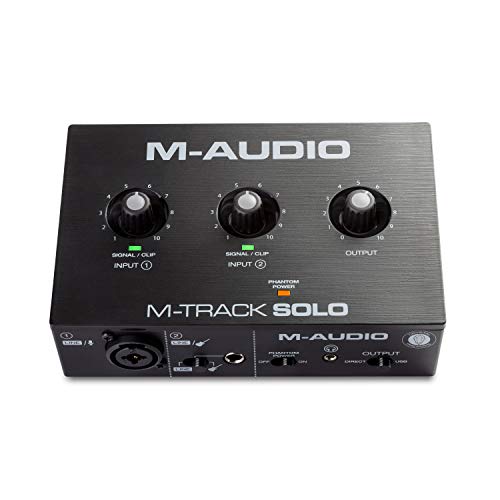
The M-Track Solo is a compact 2-channel interface with a single XLR/line input and a line/instrument input, plus a simple monitoring path. It’s designed for easy setup, making it a practical choice for beginners, podcasters, and hobbyists who want a straightforward, affordable solution for recording and streaming.
Best for: Beginners starting a podcast or home recording project where quick setup and basic monitoring are sufficient.
Limitations: Limited to two inputs, which may constrain multi-mic or multi-instrument sessions.
Buying Guide
What should you look for in a budget audio interface?
- Number of inputs and outputs: Decide how many mics or instruments you plan to record at once. If you only need one mic or guitar, a Solo model is often enough. For two-person podcasts or small duos, a 2i2 or Duo model is more flexible.
- Mic preamps and gain: Higher-quality preamps provide cleaner gain with less noise. Look for interfaces with “class A” preamps or higher dynamic range (around 110dB to 120dB).
- Adapters and compatibility: Ensure compatibility with your computer’s OS and required software. Many options include a software bundle to get you started.
- Latency and monitoring: Zero-latency monitoring helps during recording. Check if the interface offers dedicated direct monitoring or low-latency monitoring modes.
- Phantom power: If you plan to record with condenser mics, phantom power (48V) is essential.
- Portability and build: A compact, durable design benefits mobile setups and small home studios.
FAQ
Is a $100 audio interface good enough for quality podcasting?
Yes, many models under $100 offer clean pre-amps, good dynamic range, and reliable monitoring, suitable for entry-level podcasting and home recording.
Do I need special drivers for these interfaces?
Most newer interfaces are class-compliant and driver-free on modern operating systems. Some may require drivers on older systems.
What’s the difference between 24-bit/96kHz and 24-bit/192kHz?
Higher sample rates can capture more detail, but for home use, 24-bit/96kHz or 24-bit/192kHz both provide excellent quality; choose based on your workflow and file sizes.
Can I use these interfaces with iOS devices?
Some models support iOS with appropriate adapters; check the manufacturer’s compatibility list for iOS devices and required cables.
Which interface is best for two people recording at once?
Two-input models like the Scarlett 2i2 or similar 2-channel interfaces are best for two-person recording without an external mixer.
Do budget interfaces include software?
Many include a basic software package or DAW trial; this can help you get started without purchasing additional software.